How to choose the right safe and security cabinet? Buyer's guide.
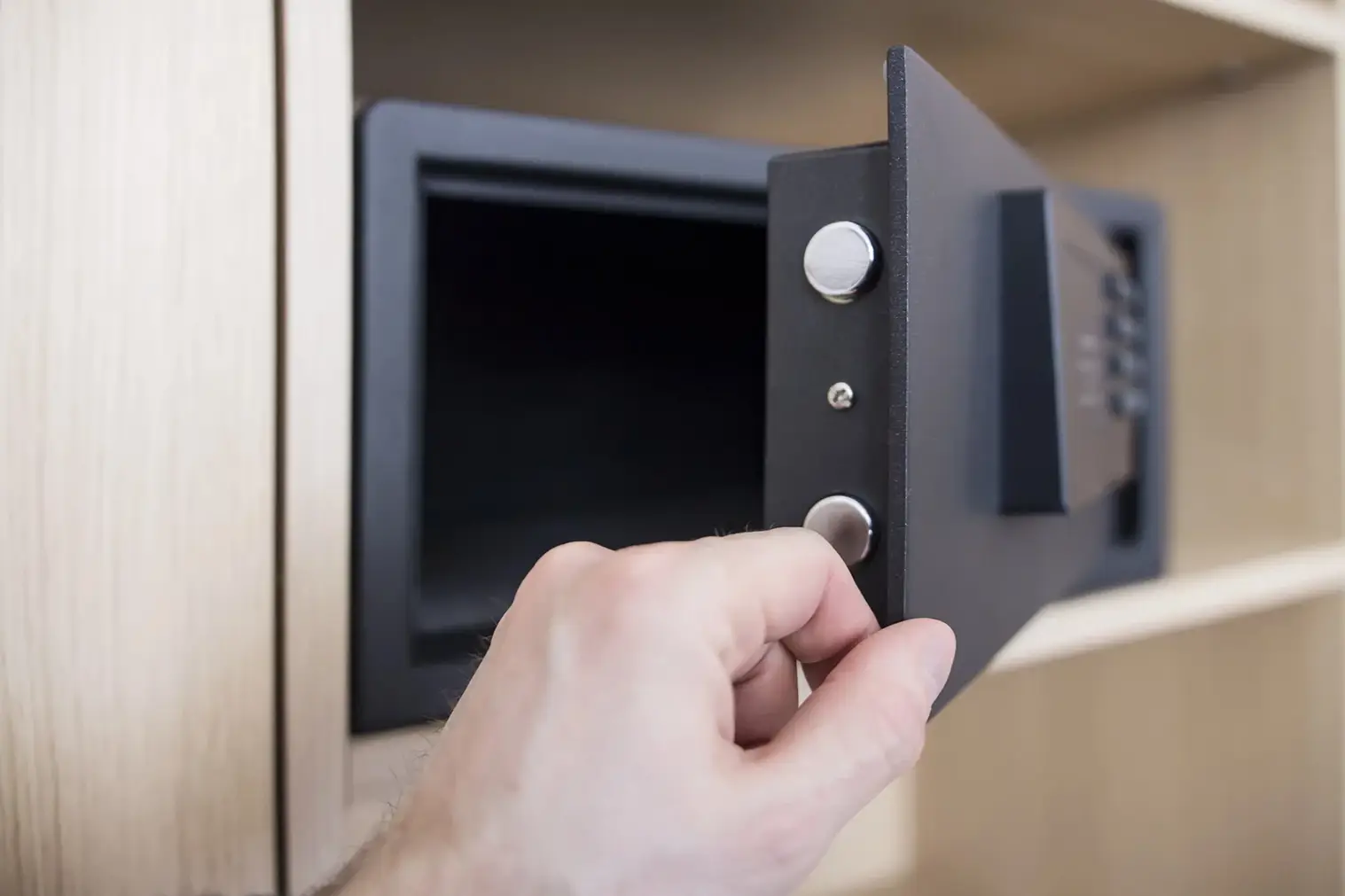
February 2026 – Safes and valuables cabinets are the ideal solution for protecting valuables or confidential documents. However, choosing the right model requires assessing your needs, the storage space required, the nature of the protected items, and many other factors. Today, we will help you better understand this issue so that you can make the right investment!
1 - List of items or documents to be protected Valuables
Valuables
This includes securing jewelry, collectibles, computer equipment, and firearms and ensuring they are insured by taking out appropriate insurance.
Documents
Identity documents, strategic or confidential documents and cash: these small items are often the most important to protect.
Computer data
To ensure fireproof protection of data or computer media (CDs, DVDs, USB drives, etc.), there are specific armored cabinets designed to preserve your documents in the event of a fire or building destruction. These cabinets are more difficult to open than simple cabinets and are also theft-resistant.
2 - Determining Storage Capacity
Whether you choose a small safe or a large security cabinet, your choice will depend on the volume of items you need to protect. Ideally, it is best to leave an additional 25% of space for future valuables that you may want to protect.
Small Safes
Safes with a capacity of up to 20 liters are suitable for small spaces and, thanks to their compact dimensions, allow you to discreetly protect confidential documents, identity documents and small items (keys or jewelry).
Medium safes
With a capacity of 20 to 50 litres, these safes offer a medium capacity. They can store A4 sized administrative documents as well as laptops. They are functional and versatile and can be equipped with adjustable shelves to better suit your needs.
Large Vaults a safety cabinets
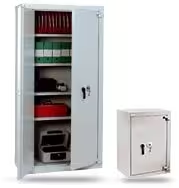
These safes with a capacity of over 50 liters allow you to store a larger amount of small items or larger products. Various types of more massive safes will also satisfy your needs with a maximum capacity of 780 liters.
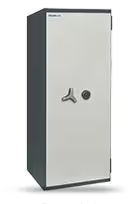
Important
Carefully studying the features of safes will allow you to choose one that offers the level of protection appropriate to your needs. Keep in mind that simply storing valuables in a safe is not enough to ensure insurance coverage. Insurance companies may set specific security standards regarding the level of protection.
3 - Protection from prying eyes
If you want to simply protect your documents or valuables from prying eyes and restrict access to only authorized persons, you have a wide range of products to choose from. If you do not wish to insure your belongings, it is not necessary to obtain special certification.
4 - Protection against theft and burglary
For valuable items and to ensure compensation in the event of loss, it is essential to choose safes that are approved, certified by insurance companies and meet strict standards.
Standards
Standards are established on the basis of tests carried out by independent laboratories accredited by insurance companies in relation to the requirements of a predefined set of specifications (in particular as regards the method of forced entry and the time required to resist).
The recognised European anti-theft standards are EN 14450 for classes S1 and S2 and EN 1143-1 for classes 0 to 5. These European standards cover different levels of protection depending on the time and tools used to open safe, as well as resistance to forced entry and removal. Safes certified according to the EN 14450 standard are intended for domestic use and for small and medium-sized businesses to protect assets with a low insurable value.
Locks, on the other hand, must meet the A2P (Assurance Prévention Protection) certification, which determines their level of resistance after laboratory tests, taking into account a combination of factors such as the type of tool used and the time required for burglary. In France, the CNPP (National Centre for Prevention and Protection) holds this certification.
| Resistance is expressed by asterisks: | A2P* | A2P** | A2P*** |
|---|---|---|---|
| Resistance time | 5 Minutes | 10 Minutes | 15 Minutes |
| Estimated time needed to open the door under real conditions (source CNPP) | 10 Minute | 30 Minute | 45 Minute |
Insurable Value Levels
After passing the conformity tests, safes that meet European standards receive a classification number (between 0 and 5) which determines their security level based on their insurable value. Insurance companies use this indicative classification to determine the amount of cover.
Although safes can be sold without meeting these requirements, their certification guarantees their effectiveness and only products that meet these standards can be called "safes". Each class indicates the insurable value as follows:
- Classes S1 and S2: no insurable value. Although these German classes are not recognized by Canadian insurance companies, they are a real guarantee of quality protection against theft.
- Classes S1 and S2: no insured value
- Class 0: 11,700 CAD
- Class 1: 36,400 CAD
- Class 2: 51,000 CAD
- Class 3: 80,200 CAD
- Class 4: 160,300 CAD
- Class 5: 291,500 CAD
Furthermore, to be insurable, the safe must be fixed to the ground on a concrete slab (provided that it weighs less than 500 kg).
5 - Fire protection
A safe or security cabinet offers more than just protection against theft and burglary, but also another guarantee: fireproof protection.
Fireproof safes and cabinets with more resistant walls will protect your documents or valuables in the event of a fire by slowing down the temperature rise inside the safe. Please note that fireproof safes are only a basic option, while fireproof products offer a higher level of protection.
A fireproof safe is larger than a traditional safe, as it is reinforced with more durable materials and is available in a variety of sizes. It is often heavy and difficult to move, especially since it is sometimes bolted to the floor. It proves to be essential for companies that keep their documents for many years, for the simple reason that fire is never unpredictable.
Fireproof safes and cabinets, although not indestructible, provide effective protection against flames, as they withstand high temperatures until the arrival of the rescue services.
Fireproof or fireproof safes and cabinets (DIN 4102 standard)
These products, the cheapest on the market, have a degree of fire resistance that has not been tested not even verified. Although their walls are reinforced and have better thermal insulation than standard safes, they are not fireproof and only slow down the spread of flames (for approximately thirty minutes). These models according to DIN 4102 are marked as fireproof (in contrast to fireproof safes and cabinets).
Fireproof safes and cabinets
Fireproof safes and cabinets are specially designed to withstand fire. To ensure their effectiveness, manufacturers test them for fire exposure time, temperature, and sometimes water resistance. The quality of your safe is ensured by several tests under the supervision of accredited laboratories. For example, products meeting the EN 1047-1 standard will protect your valuables even in the most demanding situations, while waiting for the rescue services and even in their absence.
Good to know:
At temperatures above 50°C, CDs and hard drives will start to lose data, meaning they can be destroyed in less than a minute. Paper documents will spontaneously combust in less than 3 minutes at 177°C. Other critical temperatures for storing materials include: floppy disks at 55°C, magnetic tapes and discs at 65°C, and microfilm and microfiche at 80°C.
6 - Protecting your safe from moisture
To prevent your valuables or documents from getting damaged irreversibly by water, you can choose waterproof models. Likewise, to get ETL certification, they must pass a series of laboratory tests: this includes submerging the safe for one hour and only letting through a few drops of liquid to get the certification. Waterproof safes offer optimal protection against moisture, which is much better than traditional safes, mainly thanks to special seals or strips. All items stored inside will be protected from water and fire for at least thirty minutes, especially during the intervention of the fire department, as firefighters can spray the safe with water. Waterproof safes also have all the features of burglar-resistant and fire-resistant safes.
7 - Differentiating between different opening systems
The simplest and most economical: the key safe
Simplicity, autonomy and functionality are the main characteristics of key safes. They can be equipped with one or several keys, which in the latter case must all be in the lock at the same time to be able to open them. With this traditional and economical system, there is no need to remember any code or recharge the battery. This safe, ideal for occasional use, can be installed in any room, although the risk of losing the keys remains high.
The most traditional: mechanical combination safe
The combination safe is a system recognized for its efficiency. It offers a higher level of security compared to key safes. By turning the dials, the combination provided by the manufacturer for direct opening or opening in combination with the insertion of a key is displayed.
The safest: the electronically controlled safe
These safes are equipped with a touch screen or a keypad that allows you to enter a PIN to lock and unlock them. They offer an excellent price-quality ratio and provide several advantages: they are easy to use; They do not require a key and some models lock after several unsuccessful attempts, which reduces the risk of fraud; sometimes they allow the creation of multiple codes that will be used by all authorized persons; and finally, they ensure a high level of security thanks to the many possible combinations. The disadvantage is again that it is easy to forget the code. These models are usually battery operated, although most offer a backup key operated opening system.
The most versatile: combination-operated safe
Some models combine different opening systems to offer an optimized level of security.
Digital variant: Safe with biometric opening
Despite the still high price, this is undeniably the latest model that incorporates the latest technology. The scanner records the user's fingerprint. The safe will only open if the system recognizes it. In theory, no one else can open it. These safes offer a particularly high level of security, without the risk of losing the key or having to remember (and share) the code. Different fingerprints can be scanned, allowing multiple people to use the safe.
8 - Properly Installing a Safe or Security Cabinet
Bei der There are many factors to consider when choosing the best security solution.
Effectively protecting your valuables means ensuring that you can use your safe on a daily basis. The less it is accessible, the less you will be able to use it. When planning a safe installation, ease of use and accessibility should be your top priority.
While safes or large safes, often equipped with two doors, offer ample storage capacity, they remain heavy and bulky. Therefore, they require more floor space and it is essential to assess the opening angle of the doors before installation.
While small safes are best bolted down, larger safes will make the situation much more difficult for potential thieves. It is important to consider the load on the floor with these models. The space where the safe (sometimes weighing up to 1 ton) will be located will likely need to be equipped with a support plate (which we can provide on request) to increase its resistance.
9 - Understanding Burglary Standards
Understanding the meaning of standards and labels is one of the most important aspects of buying a safe. These indicators will help you make your choice: standards and labels guarantee the quality and performance of your safe. The standard, which can be defined as the specifications used by the manufacturer, is certified by the label.
EN 14450: for resistance below class 0. This corresponds to classes S1 and S2. The security level is expressed in SU (security units). The higher the number of units, the higher the security level. These products resist non-professional burglary using a limited range of tools for a relatively short period of time. Due to the shorter resistance time, these safety (or security) safes are intended for private individuals and small businesses, for low-value items.
EN 1143-1 standard: for safes that have passed tests and offer a resistance level between classes 0 and 5 (armored safes). This resistance level is determined by the RU (Resistant Unit) criterion: the higher the RU number, the higher the resistance level.
These standards are complemented by the French A2P label (which specifies the resistance time of locks against burglary attempts) or the German VDS label.
10 - Understanding Fire Safety Standards
To take into account the different resistance of different media (paper, CDs, cassettes, etc.), several protection classes have been established within the framework of these tests.
Protection classes (P, D and DIS)
Since paper does not offer the same heat resistance as multimedia media, each fireproof cabinet receives a specific certification based on the type of document, for which it is intended.
- Cabinets that protect paper documents and files at temperatures below 165 °C.
- Class D: Cabinets designed for magnetic tapes and heat-sensitive paper.
- Class DIS: Cabinets for multimedia and magnetic media (CDs, DVDs, videos, etc.) that they are sensitive to temperature and humidity.
Each class is then divided into three categories, which determine the maximum time the documents can be kept before the arrival of emergency services (1, 2 or 3 hours).
Fire safety standards
Fire safety standards are supplemented with information about the product's resistance time.
EN 1047-1 standard: the most demanding standard in Europe. According to EN 1047-1, safes are exposed to extreme conditions. This is the most demanding standard for fire protection. Two series of tests are carried out: a fire resistance test and a thermal shock test (in the case of an explosion), followed by a drop resistance test (in the case of a collapse).
VDMA standards for paper documents (S 60P or S 120P) and digital media (S 60DIS or S 120DIS). The VDMA process, developed by German manufacturers, tests for fire resistance and the consequences of a fall from a height of 9 meters, simulating a collapse of the floor. During testing, a safe can be approved for one hour (S 60P and S 60DIS) or two hours (S 120P and S 120DIS) of resistance to the destruction of paper and computer media.
11 - Understanding Labels
The label, which is a guarantee of safety and compliance with regulations, aims to determine the actual resistance of the product.
A2P Label
This label, issued by an independent body, is awarded to products that have passed a series of extreme tests for burglary resistance. Obtaining the label is also subject to an annual audit of the manufacturing plant.
ECB-S Label
This European label evaluates the security level, the degree of resistance, the protection class, the locking class and the resistance class.

VdS label
This is one of the most demanding in Europe. It is issued by independent German authorities and recognized by the German Insurance Association.

SBSC label
This label, created in 1997 by the Swedish Fire Protection Association guarantees a high level of fire safety.

LPCB label
A prestigious, independent British accreditation with over a 100-year history, the LPCB label guarantees the effectiveness of products as protection against burglary and fire.